What are the key differences between oil-immersed and dry transformers?
Discover the key differences between oil-type and dry-type transformers: cooling, fire safety, losses, overload capacity, maintenance, cost, and lifespan, so you can pick the right one for your project.
2026/11/18
Reading volume: 0
News Details
Many buyers ask the same question before they place an order: should I choose an oil-immersed transformer or a dry-type transformer? Both types change voltage and move power through a distribution network. Yet they use very different methods to cool and protect their windings. That single difference shapes where you can install the unit, how much you pay, and how much care it needs over its life.
This guide explains the key differences in plain language. It covers cooling, fire safety, losses, overload ability, maintenance, cost, and service life. By the end, you will have a clear way to decide which type fits your project. If you want to review product options first, browse our oil-immersed transformer range.
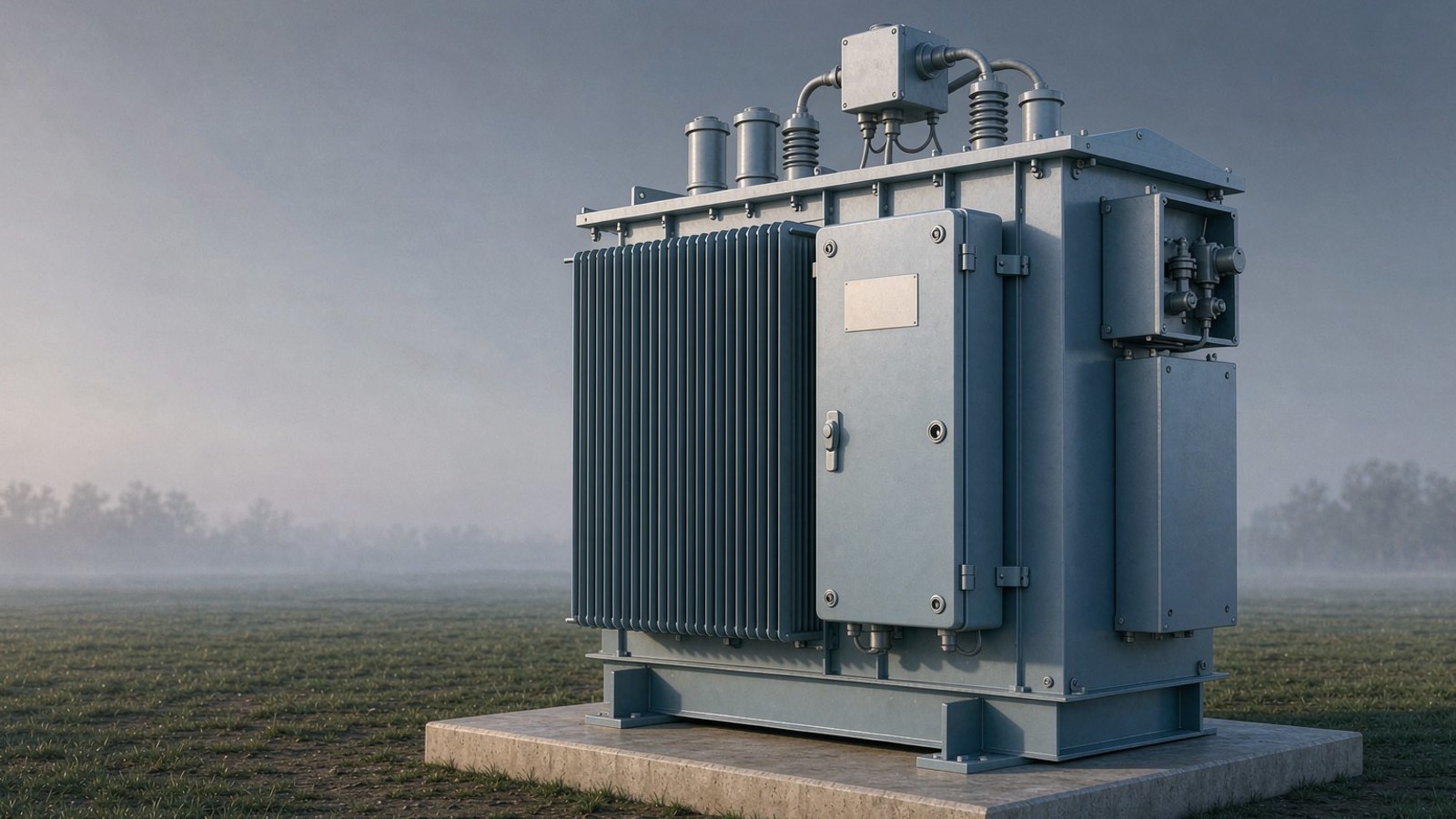
What is an oil-immersed transformer?
An oil-immersed transformer places its core and windings inside a sealed steel tank. The tank is filled with insulating oil. The oil does two jobs at once. It insulates the live parts from each other, and it carries heat away from the windings to the tank walls and radiators. Most distribution units use mineral oil. Some projects use natural or synthetic ester fluid when fire rules or environmental rules are strict.
This design is the long-standing choice for outdoor substations, utility networks, and heavy industrial sites. It handles high capacity well and usually costs less per kVA than a dry-type unit of the same rating.
What is a dry-type transformer?
A dry-type transformer uses air or solid resin instead of oil. The windings are often cast in epoxy resin or treated with vacuum pressure impregnation. Air moves across the winding surfaces to remove heat. Small rooms may use natural air flow. Larger rooms add fans.
Because there is no flammable liquid inside, dry-type units are common in hospitals, schools, data centres, and high-rise buildings. They sit close to the loads they serve.
Transformer cooling and insulation: the core difference
The main difference between the two types is the cooling and insulation medium. Oil touches every winding surface and moves heat to radiators by natural circulation. Designers call this ONAN, or oil natural air natural. When fans help the radiators, the class becomes ONAF.
A dry-type unit relies on air. Air carries less heat than oil. So a dry-type transformer of the same rating is often larger, and its overload margin is smaller. This gap grows as capacity rises.
Fire safety and installation: indoor or outdoor?
Oil is combustible. An oil-immersed transformer usually goes outdoors, or inside a dedicated fire-rated room with oil containment and ventilation. Fire codes in many countries set clear spacing and barrier rules for oil-filled equipment.
A dry-type transformer has no oil to leak or burn. It is self-extinguishing and gives off little smoke. That makes it the safer choice inside an occupied building. If your project is indoors, check local fire rules early. You can also read our detailed dry-type vs oil-immersed comparison for more detail.

Transformer efficiency and losses
Both types have no-load loss and load loss. No-load loss appears as soon as the unit is energised. Load loss rises with current. Oil-immersed designs often show lower loss at high load, which matters when a site runs near full capacity for long hours.
When you compare offers, ask for the tested loss values, not a general claim. Low-loss grades such as S13 or S20 reduce running cost over a 20 to 30 year life. Our guide to matching kVA rating to real load explains how load level affects energy cost.
Transformer overload capacity
Oil absorbs heat well. A large oil volume can carry short-term overloads while fans or natural cooling catch up. This is why industrial plants with shifting loads often prefer oil-immersed units.
A dry-type transformer has less thermal mass. It can overload for a short time, but repeated peaks age the insulation faster. If your load swings sharply, confirm the overload duty with the manufacturer in writing.
Oil-immersed transformer maintenance vs dry-type
This is where the two types differ most in daily work. An oil-immersed transformer needs periodic oil sampling. Buyers often use dissolved gas analysis (DGA) to spot internal faults and a breakdown voltage (BDV) test to check oil strength. Teams also watch oil level, breather silica gel, and top-oil temperature.
A dry-type transformer needs far less. Cleaning, checking fans, and measuring insulation resistance cover most of the work. There is no oil to test, filter, or replace. If you have no maintenance team, this is a real advantage. Our article on common transformer faults and maintenance gives a fuller checklist.
Transformer cost comparison and service life
At the same rating, an oil-immersed transformer usually costs less to buy. A dry-type unit can cost notably more per kVA. But the purchase price is only part of the picture.
Indoor oil units may need fire walls, containment pits, and extra civil work. Dry-type units avoid that cost. On the other hand, oil units often last 25 to 40 years when maintained well, and they can be refurbished. The paper insulation sets the life limit, and heat, moisture, and oxygen speed up ageing. Read more about transformer lifespan and maintenance before you compare bids.
How to choose the right transformer type
Use these points as a quick decision guide.
- Indoor, occupied space: choose dry type for fire safety.
- Outdoor substation or utility network: choose oil immersed for cost and cooling.
- High capacity or heavy industrial load: oil immersed usually wins on price and overload ability.
- No maintenance team: dry type reduces oil testing work.
- Tight budget on civil works: dry type can avoid fire-rated rooms.
Always compare tested loss values, the applicable standard such as IEC 60076, and the full install cost. Two quotes at the same kVA are not equal if the loss figures differ.
Summary
Oil-immersed and dry-type transformers both move power well. Oil-immersed units lead on cooling, overload ability, capacity, and purchase price. Dry-type units lead on fire safety, indoor placement, and low maintenance. Your site, your load, and your local fire code should make the decision. If you want help matching a type to your project, contact our engineering team with your kVA, voltage, and installation details.
Share to:


