Basic Guide To Oil Immersed Transformer
A basic guide to oil-immersed transformers: how they work, main parts, cooling methods, types, key specifications, applications, maintenance and how to select the right unit.
2026/11/18
Reading volume: 0
News Details
An oil-immersed transformer is the most common type of power transformer in use today. You will find it in utility substations, industrial plants, and outdoor distribution networks. Its core and windings sit inside a steel tank filled with insulating oil. This simple design gives it strong cooling, good overload ability, and a long service life.
This basic guide explains how an oil-immersed transformer works, what its main parts do, and which specifications matter when you buy one. It also covers cooling methods, common types, maintenance, and selection. If you are new to this equipment, start here. For product options, see our oil-immersed transformer category.
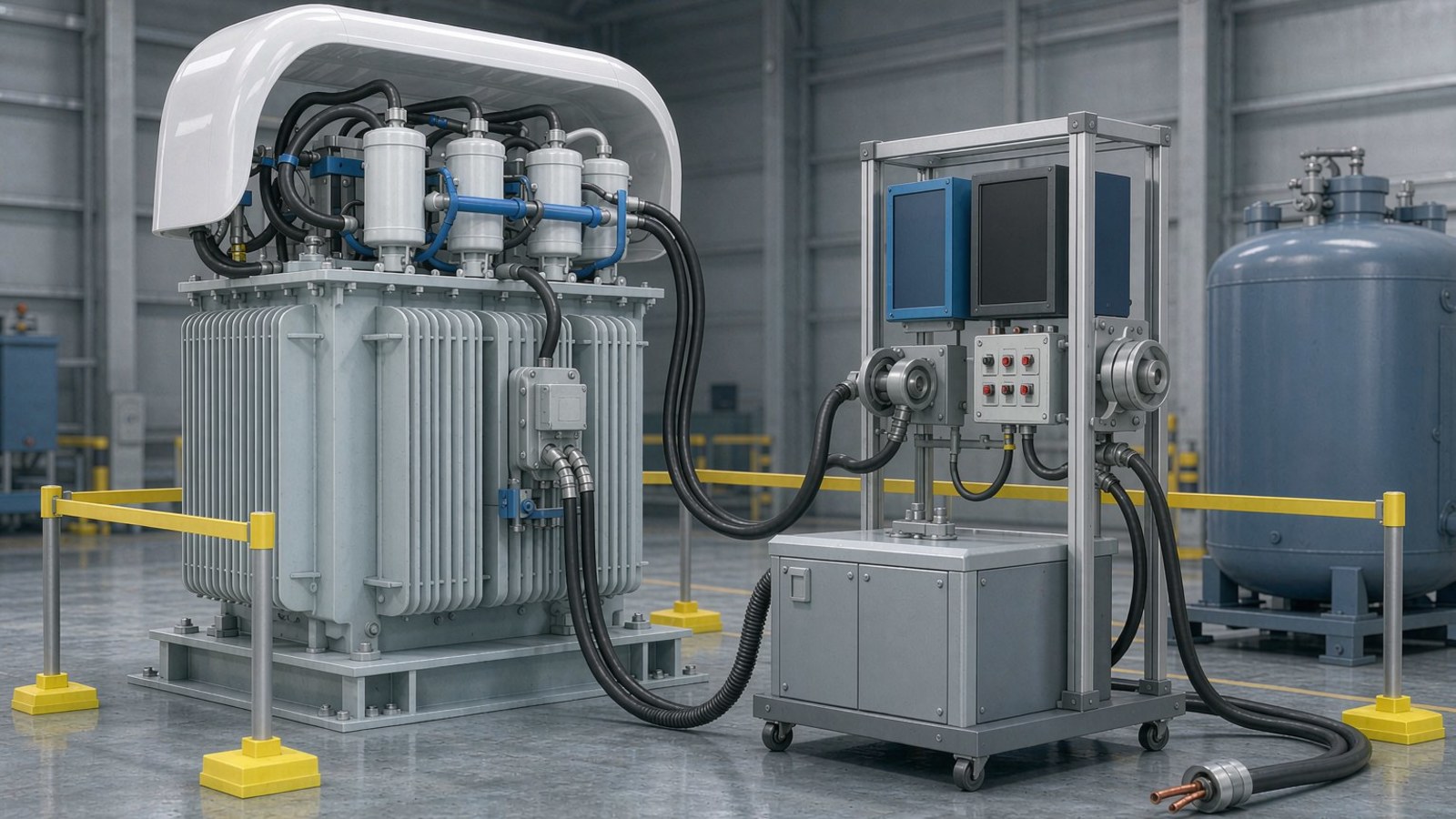
What is an oil-immersed transformer?
An oil-immersed transformer uses oil for two jobs at the same time. The oil insulates the windings, the core, and the tank from each other. It also carries heat from the windings to the tank surface and radiators. Air then removes the heat from the radiator fins.
Most units use refined mineral oil. Where fire rules or environmental rules are strict, a natural ester or synthetic ester fluid can be used. These fluids have a higher flash point and break down more easily in nature.
How does an oil-immersed transformer work?
The transformer works by electromagnetic induction. Alternating current flows into the primary winding and creates a changing magnetic field in the steel core. That field passes through the secondary winding and induces a voltage there. The ratio of turns between the two windings sets the voltage change.
No moving parts take part in this process. That is one reason transformers are reliable and quiet. The losses that do appear turn into heat, and the oil removes that heat. Our guide to transformer working principle and applications explains the physics in more detail.
Main parts of an oil-immersed transformer
Knowing the main parts helps you read a quotation and a test report.
- Core: stacked silicon steel sheets that carry the magnetic field.
- Windings: copper or aluminium coils that carry current. Copper costs more but has lower loss.
- Tank: the sealed steel body that holds the core, windings, and oil.
- Radiators or fins: surfaces that release heat into the air.
- Bushings: insulated terminals that bring high and low voltage conductors out of the tank.
- Conservator or sealed cover: space that lets oil expand and contract with temperature.
- Tap changer: a device that changes the turns ratio to adjust output voltage.
- Protection devices: items such as the Buchholz relay, pressure relief valve, and temperature gauges.
Transformer cooling methods: ONAN, ONAF and more
Cooling codes tell you how oil and air move through the unit.
- ONAN (oil natural, air natural): oil moves by natural convection and radiators cool without fans. This is the standard choice for most distribution transformers.
- ONAF (oil natural, air forced): fans blow air over the radiators. This raises the continuous rating, often by about 20 to 30 percent on the same tank.
- OFAF / OFWF: pumps force oil through external coolers. These suit large power transformers.
Always confirm the cooling class, ambient temperature, and altitude together. A rating quoted for one site may not apply to another.
Common types of oil-immersed transformers
Buyers usually meet a few standard designs.
- Distribution transformers: often 30 to 2,500 kVA, stepping grid voltage down to 400 V or 415 V for users.
- Power transformers: larger units used in substations and transmission networks.
- Sealed transformers: a closed tank absorbs oil movement. Good for humid or coastal sites.
- Conservator transformers: an external oil tank with a breather and silica gel keeps moisture out. Common at larger ratings.
- Single-phase and three-phase units: single-phase suits rural lines; three-phase serves most industrial and commercial loads.
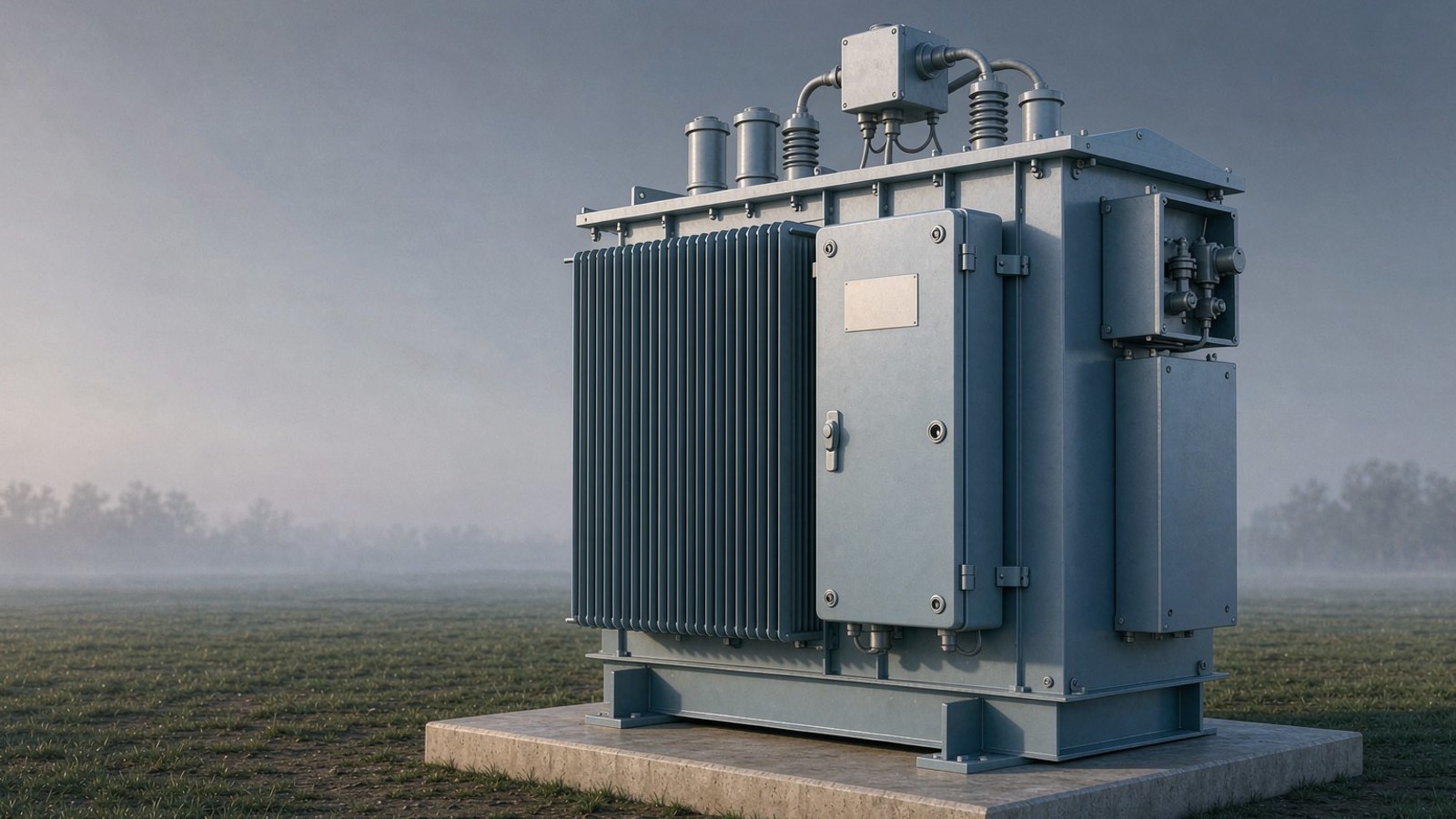
Key specifications buyers should check
A complete quotation should state each of these in writing.
| Specification | Why it matters |
|---|---|
| Rated capacity (kVA) | Sets the load the unit can carry without overheating. |
| Voltage ratio and frequency | Must match the grid and the site (50 or 60 Hz). |
| Vector group | Dyn11 is common for distribution; confirm for parallel operation. |
| No-load and load loss | The main driver of running cost over the service life. |
| Impedance voltage | Sets short-circuit current and protection settings. |
| Cooling class | ONAN or ONAF, matched to ambient temperature and load. |
| Applicable standard and tests | IEC 60076 or ANSI, plus routine test reports. |
Ask for a routine test report tied to the unit serial number. Our note on the transformer factory acceptance test lists what to check before shipment.
Where oil-immersed transformers are used
These units suit outdoor and demanding sites.
- Utility distribution and substations: the most common application worldwide.
- Factories and process plants: steel, cement, and chemical sites with heavy continuous loads.
- Mining and remote sites: robust tanks and high overload tolerance help.
- Renewable energy: solar, wind, and hydro plants need step-up and auxiliary transformers.
- Commercial complexes with dedicated yards: where outdoor space is available.
Oil-immersed transformer maintenance and testing
Good care keeps a unit running for decades. The key tasks are simple but must be consistent.
- Check oil level and look for leaks at gaskets and bushings.
- Test oil breakdown voltage (BDV) every 6 to 12 months.
- Run dissolved gas analysis (DGA) to catch internal faults early.
- Replace breather silica gel before it saturates.
- Record top-oil and winding temperature at steady load as a baseline.
- Investigate any gas alarm at once.
Moisture and heat age the paper insulation, which sets the real life limit. Learn more in our guide to transformer faults and maintenance solutions.
Service life and total cost
A well-maintained distribution unit often runs 25 to 35 years. Large power transformers can reach 40 years or more. The paper insulation sets the limit, and it ages faster when oil runs hot, wet, or dirty.
Compare total cost, not just the invoice. Add energy loss over the service life, civil works, maintenance labour, and spare parts. A higher-efficiency unit can repay its price difference in a few years of lower losses.
How to select an oil-immersed transformer
Follow this short process before you send an enquiry.
- Calculate real demand in kVA from connected load, diversity, and future growth.
- Confirm primary and secondary voltage, frequency, phase, and vector group.
- Set no-load and load loss limits to the local efficiency standard.
- Choose the cooling class for your ambient temperature and altitude.
- State indoor or outdoor installation, and any IP or enclosure needs.
- Request routine and type test reports with the offer.
A short, complete input list gets an accurate proposal faster. You can send your specification to our team for review. We also explain the full oil-immersed transformer series on our site.
Summary
An oil-immersed transformer uses oil to insulate and cool its core and windings. That design delivers strong cooling, high overload ability, wide capacity range, and good value per kVA. Know the main parts, read the cooling code, check every key specification, and plan basic oil testing. With the right rating and steady maintenance, the unit can serve a site for decades.
Share to:


