
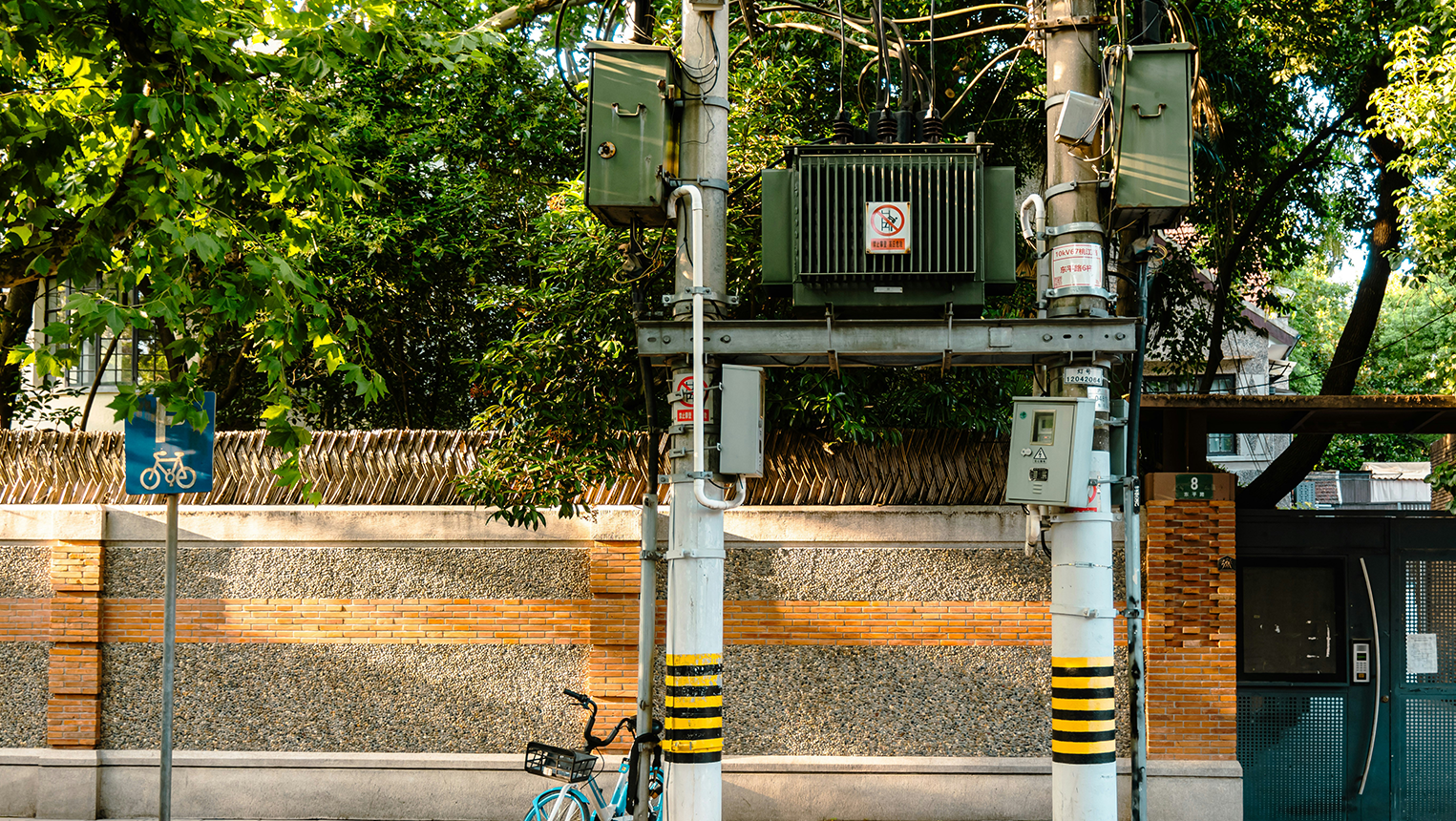
Power distribution transformers are everywhere. You see them on poles, in green boxes on the ground, and inside buildings. Their job is simple but vital. They take medium voltage electricity from the grid and step it down to the low voltage your home or business uses. But not all units are the same. In fact, there are several power distribution transformer types, features, and benefits explained in this guide. Each type works best in a specific place. Therefore, picking the right one saves money, improves safety, and lasts longer. So, let us break down the most common types, their key features, and the benefits they offer.
Pole Mounted Transformers: A Common Power Distribution Transformer Type Explained
First, look up at any utility pole. You will often see a small metal can. That is a pole mounted transformer. It is one of the oldest power distribution transformer types, and it is still very popular today.
Features of Pole Mounted Transformers
These units are small, typically ranging from 10 kVA to 167 kVA. They hang on a single pole or a two-pole structure. In addition, they are filled with oil for cooling and insulation. Furthermore, they have fused cutouts and lightning arresters built into the mounting. This protects them from storms and overloads.
Benefits of Pole Mounted Transformers
First, they are low cost. Because they are mass produced, they are very affordable. Second, they keep the equipment off the ground. This is safer for children and pets. Third, they are easy to install. A crew with a bucket truck can change one in a few hours. Finally, they work well in rural and suburban areas where homes are spread out. For these reasons, the transformer benefits of pole-mounted units include low upfront cost and quick replacement.
Pad Mounted Transformers: A Ground Level Power Distribution Transformer Type Explained
Next, walk through a new neighborhood. You will see green or beige metal boxes sitting on concrete pads. These are pad mounted transformers. They are the standard choice for underground power lines.
Features of Pad Mounted Transformers
These units sit at ground level inside a locked, tamper-proof cabinet. They are oil-filled and come in sizes from 75 kVA up to 5,000 kVA. In addition, they have high-voltage and low-voltage compartments that are separated for safety. Most importantly, they are designed to be accessible from the front only. The back and sides are against a wall or fence. Therefore, only utility workers can open them.
Benefits of Pad Mounted Transformers
First, they make the neighborhood look cleaner. There are no overhead wires or poles. Second, they are safer during storms. Underground lines do not break in high winds. Third, they are harder for thieves to steal because they are heavy and locked. Finally, they work very well for commercial areas, schools, and shopping centers. So, the transformer benefits of pad-mounted units include better aesthetics and higher storm resistance.
Dry Type Transformers: An Indoor Power Distribution Transformer Type Explained
Now, go inside a building. You might see a large metal box with ventilation slots. This is a dry type transformer. It is the safest choice for indoor use.
Features of Dry Type Transformers
These units do not use oil. Instead, they use air or resin to cool and insulate the windings. They are available in sizes from 15 kVA up to 10,000 kVA. In addition, they are much heavier than oil-filled units of the same size. Furthermore, they are louder, producing a humming sound. However, they have no risk of oil leaks or fires. That is their biggest feature.
Benefits of Dry Type Transformers
First, they are fire safe. You can install them inside a hospital, school, or high-rise office without special fire protection. Second, they are better for the environment. There is no oil to spill. Third, they require less maintenance. You do not need to test the oil or check for leaks. Finally, they last a very long time, often 30 years or more. Therefore, for indoor applications, the transformer benefits of dry-type units include safety and low maintenance.
Liquid Filled Transformers: An Outdoor Power Distribution Transformer Type Explained
Outside, most transformers are liquid filled transformers. This category includes both pole-mounted and pad-mounted units. The liquid is usually mineral oil, but it can also be a less flammable fluid like Envirotemp or soybean oil.
Features of Liquid Filled Transformers
These units have a sealed tank full of dielectric liquid. The liquid does two jobs. First, it insulates the internal parts. Second, it carries heat away from the core and coils. The heat then goes to the tank walls and radiators. As a result, liquid filled units are smaller and lighter than dry types for the same power rating. In addition, they run cooler and quieter.
Benefits of Liquid Filled Transformers
First, they are more efficient. The liquid cooling allows for lower losses. Second, they take up less space. You get more power in a smaller footprint. Third, they are quieter than dry types. This matters in residential areas. Finally, they are less expensive to buy. The main transformer benefits of liquid-filled units are better efficiency, smaller size, and lower cost. However, you must manage the risk of leaks.
Key Features of All Power Distribution Transformer Types
Before you choose a specific type, you should know the common distribution transformer features that affect performance and life.
Core and Coil Material
Most transformers use copper or aluminum windings. Copper is more efficient but costs more. Aluminum is cheaper but needs a larger cross-section. Similarly, the core is made of steel. High-grade grain-oriented steel gives lower losses. Some modern units use amorphous metal for even better efficiency.
Insulation Class
The insulation determines how hot the transformer can run. Common classes are 105°C, 130°C, 155°C, 180°C, and 220°C. A higher class means the unit can handle more overload. However, running cooler extends life. So, pick the insulation class based on your climate and load pattern.
Tap Changer
Most distribution transformers have a tap changer. This is a switch that adjusts the output voltage slightly. It compensates for low or high incoming voltage. You usually set it once during installation. Therefore, this small distribution transformer feature can solve many voltage problems.
Enclosure Type
Outdoor units need a weatherproof enclosure. Indoor units need ventilation but not full weather sealing. For pad-mounted units, the enclosure must be lockable and corrosion resistant. Stainless steel or powder-coated steel are common choices.
Benefits of Choosing the Right Power Distribution Transformer Type Explained
Why does type matter so much? Because each power distribution transformer type, features, and benefits explained above leads to different real-world outcomes.
- Safety benefits: Dry type for indoors prevents fires. Pad-mounted with locks prevents accidents. Pole-mounted up high keeps people away from live parts.
- Cost benefits: Pole-mounted units are cheapest to buy. Liquid filled units are cheapest to install per kVA. Dry type units save money on oil disposal and leak cleanup.
- Reliability benefits: Liquid filled units run cooler, so they last longer under heavy loads. Dry type units have no oil to leak, so they fail less often from leaks.
- Space benefits: Liquid filled units are smaller. Pole-mounted units take zero ground space. Pad-mounted units need only a small concrete pad.
- Environmental benefits: Dry type has no oil. Modern liquid filled units use biodegradable fluids that are safer for soil and water.
How to Compare Power Distribution Transformer Types for Your Project
Now that you know the types, features, and benefits, how do you choose? Follow this simple comparison guide.
Step 1: Determine Your Installation Location
- On a pole in a rural area? Choose pole mounted.
- On the ground in a neighborhood with underground wires? Choose pad mounted.
- Inside a building? Choose dry type.
- Outside near a factory or substation? Choose liquid filled (pad or skid mount).
Step 2: Check Local Codes and Utility Rules
Your utility company often has a list of approved types. In addition, local fire codes may ban oil-filled units inside buildings. Some coastal areas require extra corrosion protection. So, always check first.
Step 3: Compare Efficiency and Losses
Higher efficiency units cost more upfront but save money over time. Look for the DOE 2016 efficiency levels (in the US) or equivalent standards in your country. Amorphous metal cores offer the lowest losses for distribution transformers.
Step 4: Plan for Future Growth
Do not buy a transformer that is exactly sized for today's load. Instead, add 25% to 50% extra capacity. This allows for future air conditioners, electric car chargers, or new machines. Otherwise, you will need to replace the unit sooner.
Common Myths About Power Distribution Transformer Types
Let me clear up a few misunderstandings.
- Myth 1: "Dry type transformers are always better."
- Fact: They are safer indoors, but they are less efficient, louder, and more expensive. For outdoor use, liquid filled is often better.
- Myth 2: "Pad mounted transformers explode often."
- Fact: Modern units have pressure relief devices and fault interrupters. Failures are very rare.
- Myth 3: "All pole mounted transformers are the same."
- Fact: They vary by kVA size, voltage rating, tap range, and insulation class. Always match the specs to your needs.
Conclusion
To sum up, understanding power distribution transformer types, features, and benefits explained in this guide helps you make a smart choice. Pole-mounted units are cheap and easy for rural areas. Pad-mounted units look clean and work well with underground lines. Dry-type transformers are safe and low-maintenance for indoor use. Liquid-filled transformers are efficient and compact for outdoor applications. Each type has unique distribution transformer features like insulation class, tap changers, and enclosure styles. Therefore, the best type depends on your location, budget, safety needs, and future plans. Use the comparison steps above. Then, pick the right transformer. Your power system will run safely and reliably for decades.



Copyright © 2026 河北阔宇电力科技有限公司 Ltd. All Rights Reserved. POWERED BY WEIMOBTRADE
